Hand-Laid vs. Combo Pools
Once a shell is in the ground and full of water, every fiberglass pool looks the same. The construction method only shows itself years later — when the soil moves, the water table rises, or the pool has to be emptied.
100%
Hand-Laid Sheets
24 oz
Woven Roving
32-mil
Gel Coat
None
Sprayed Chop
Three Ways to Build the Same Shell
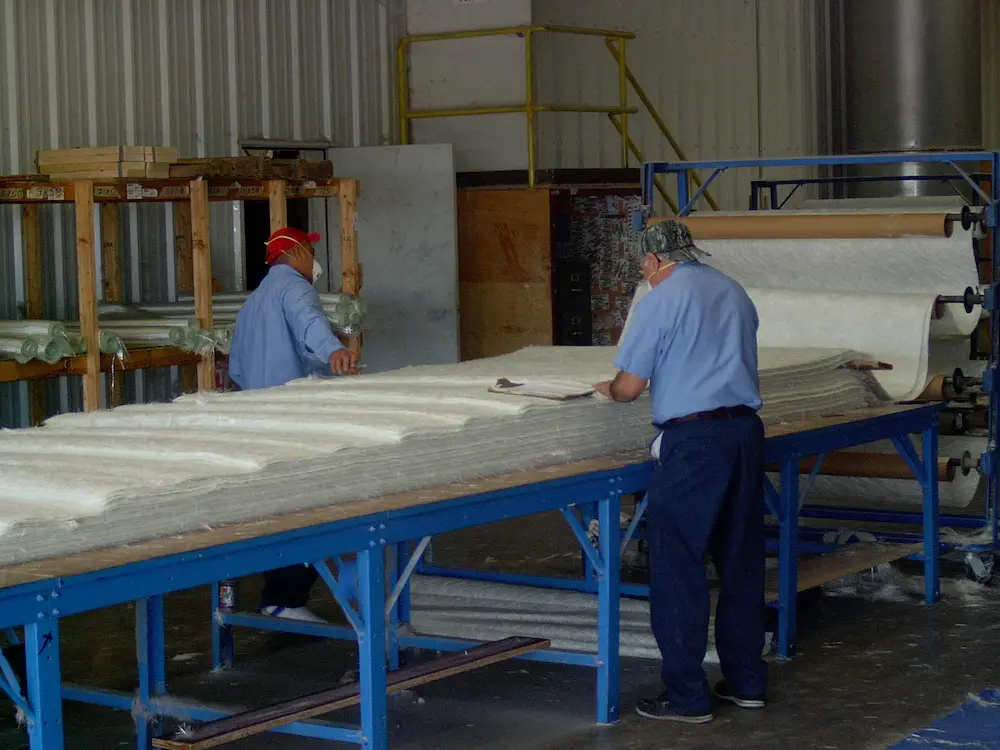
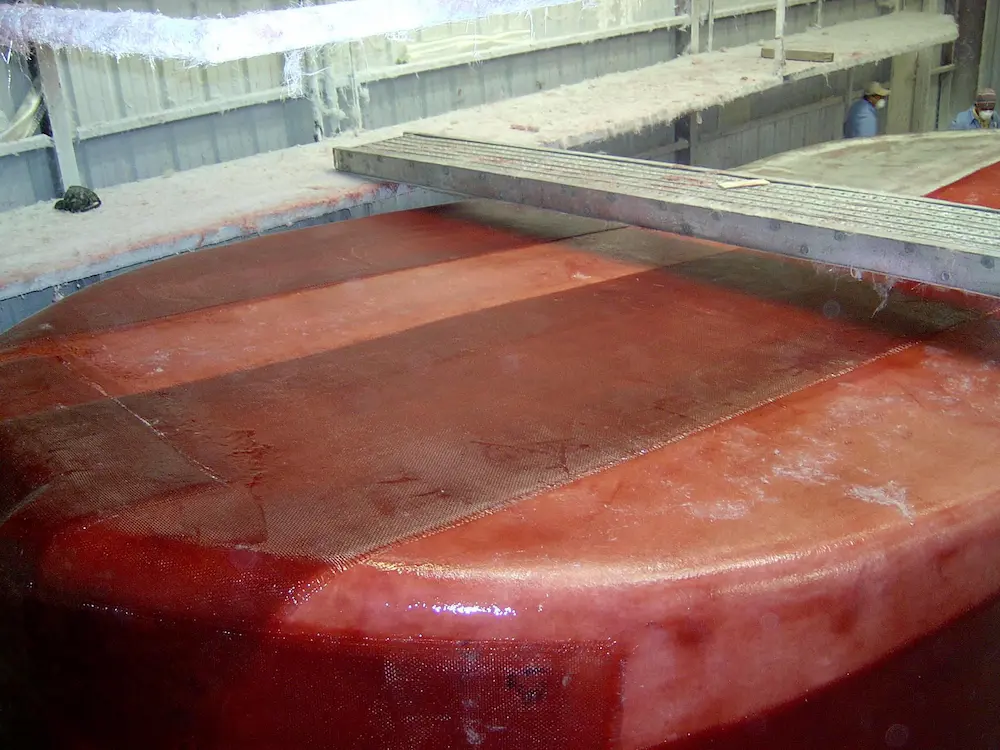
Every fiberglass pool starts the same way — a polished mold, sprayed with gel coat. What goes in behind that finish is where manufacturers separate. One sprays chopped glass from a gun. One lays a couple of woven sheets and then goes back to the gun for the rest. San Juan lays the entire laminate by hand, sheet by sheet.
You cannot see the difference on delivery day, and it will not show up in the first swim season. It shows up in the decades that follow, in the conditions Central Ohio hands a buried shell every single year.
The same wall, in cross-section
Top to bottom, exactly how each wall gets built up behind the finish.
Pure chopped
Gel coat, then short strands blown from a gun until the wall is thick enough.
Thickness ends where the operator's pass ends.
Hybrid combo
Gel coat, a chopped skin, one or two woven sheets — then straight back to the gun.
A rigid core between resin-heavy layers.
100% hand-laid
Gel coat, three layers of strand mat and two of 24 oz woven roving, every sheet laid by hand.
The same schedule on every shell we install.
Chopped, Combo, or 100% Hand-Laid
The same four questions, asked of all three construction methods. The first two are the ones a homeowner never thinks to ask until the day they matter.
Tensile strength
Pure Chopped
Very low — short strands held together by resin
Hybrid Combo
Moderate, and only in the zones that received a woven layer
100% Hand-Laid
High and uniform across the entire hull
Behavior when emptied
Pure Chopped
Stress concentrates in one spot; high risk of cracking
Hybrid Combo
Variable — riskier where the water table is high
100% Hand-Laid
Load spreads along continuous fibers; flexes and returns
Thickness consistency
Pure Chopped
Poor — as even as the operator's last pass
Hybrid Combo
Average — woven layers even out part of the wall
100% Hand-Laid
Consistent across every inch of the shell
Why it's built that way
Pure Chopped
Cheap, fast, automated
Hybrid Combo
Speed, with enough woven fabric for the spec sheet
100% Hand-Laid
Structural integrity first
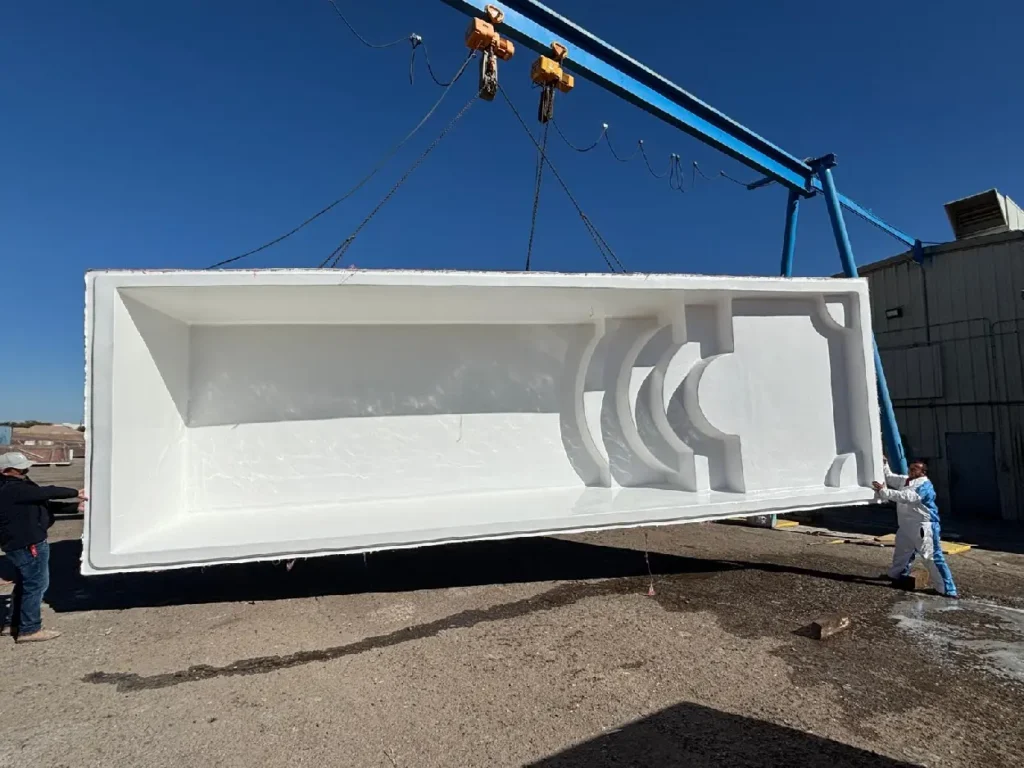
What Happens When a Pool Sits Empty
A fiberglass shell lives in balance. Water inside pushes out, soil and groundwater outside push in, and the two cancel. Take the water away and only one of those forces is left — and it does not wait for a convenient moment. Saturated clay and a high water table can press hard enough to move a wall or lift a floor.
This is where the laminate earns its price. In a sprayed shell, millions of short strands mean nothing continuous carries that load, so stress gathers wherever the wall happens to be thinnest. In a hand-laid hull, woven sheets run the length of the shell and spread the load instead of trapping it in one place — the same reason a boat hull is built this way.
Pure chopped
Short strands in resin, with no continuous fiber to share the load. Under external pressure the brittle laminate is the most prone of the three to cracking.
Hybrid combo
A rigid woven core sandwiched between resin-heavy chopped layers. Under heavy load the weaker layers can shear away from the core — what the industry calls interlaminar failure.
100% hand-laid
Continuous sheets carry the load along the full length of the wall, flexing under pressure and returning to shape instead of concentrating it in one spot.
This is margin, not permission
No fiberglass shell — ours included — is engineered to sit empty in the ground. Hand-laid construction buys you margin when something goes wrong; it is not a reason to drain your own pool. Water should never drop below the skimmer, draining belongs to a licensed professional, and unauthorized draining voids the structural warranty.
Read the warranty termsWhat “Premium” Means on a Combo Pool Brochure
Hybrid shells are engineered to be produced quickly while still earning a premium label. Two claims are worth understanding before you compare quotes.
The skin-layer trick
Gel coat, a chopped skin coat, then one or two layers of woven roving across the floor and walls — and then it is back to the chop gun to build up the rest of the thickness. Some continuous fiber beats none, but it leaves a rigid core sandwiched between weak, resin-heavy layers.
“Proprietary” Kevlar and carbon
Nobody is wrapping a swimming pool in bulletproof fabric. These are narrow strips of composite tape placed at specific stress points — corners, or the shallow-to-deep transition — and they photograph better than they perform.
The modulus problem
Kevlar and carbon stretch far less than fiberglass. When the wall flexes, the load transfers onto those isolated straps rather than being shared — and a thin, isolated strap can snap or delaminate from the shell around it.
The Slow Failures You Never See Coming
Set aside the one bad day. Construction method also decides how a shell ages through thirty Ohio winters.
Shell Construction Questions
What homeowners ask once they start comparing quotes from more than one builder. If yours isn't here, call — we would rather answer it than have you guess.
(614) 384-5081A shell that starts like a premium one and finishes like a cheap one. The factory sprays gel coat, applies a chopped skin coat, lays one or two layers of woven roving across the floor and walls — and then goes back to the chop gun to build up the rest of the thickness. It earns the woven roving line on the spec sheet while most of the wall is still sprayed chop.
Yes, and the reason is the fiber rather than the resin. Chopped glass is short strands held together by resin, so nothing continuous carries a load and stress gathers wherever the wall happens to be thinnest. Hand-laid sheets run the length of the shell, so the same load spreads along the fibers instead of concentrating in one spot — the reason boat hulls are built the same way.
Not on your own. The water inside balances the soil and groundwater pushing in from outside; empty the shell and only the outside force is left, which can move a wall or lift a floor. The water should never drop below the skimmer, draining is a job for a licensed professional, and unauthorized draining voids the structural warranty. Hand-laid construction gives a shell more margin if something goes wrong — it is not permission to empty the pool.
Not the way the brochure implies. Nobody wraps a swimming pool in bulletproof fabric — these are narrow strips of composite tape placed at a few stress points, such as corners or the shallow-to-deep transition. Kevlar and carbon also stretch far less than fiberglass, so when the wall flexes the load transfers onto those isolated straps rather than being shared, and a thin strap can snap or delaminate from the shell around it.
Ask the builder for the laminate schedule — the layers in order, with the weight of each. A manufacturer that hand-lays the whole shell will hand it over without hesitating. If what comes back is a brand name, a warranty length or the word “composite” instead of a list of layers, that is your answer.
Compare & Explore
Ask Any Builder How Their Shell Is Laid
It is a fair question and an easy one to check. We will walk you through San Juan's laminate schedule — and any competitor's quote you are holding — before you sign anything.